


DLLL 2X Dell ETF Plunges 16% as Dell Tumbles 8% in AI Hardware Selloff; Hewlett Packard Enterprise Falls 4%
DLLL 2X Dell ETF Plunges 16% as Dell Tumbles 8% in AI Hardware Selloff; Hewlett Packard Enterprise Falls 4%

David MoadelFri, November 13, 2026 at 7:03 PM UTC
0
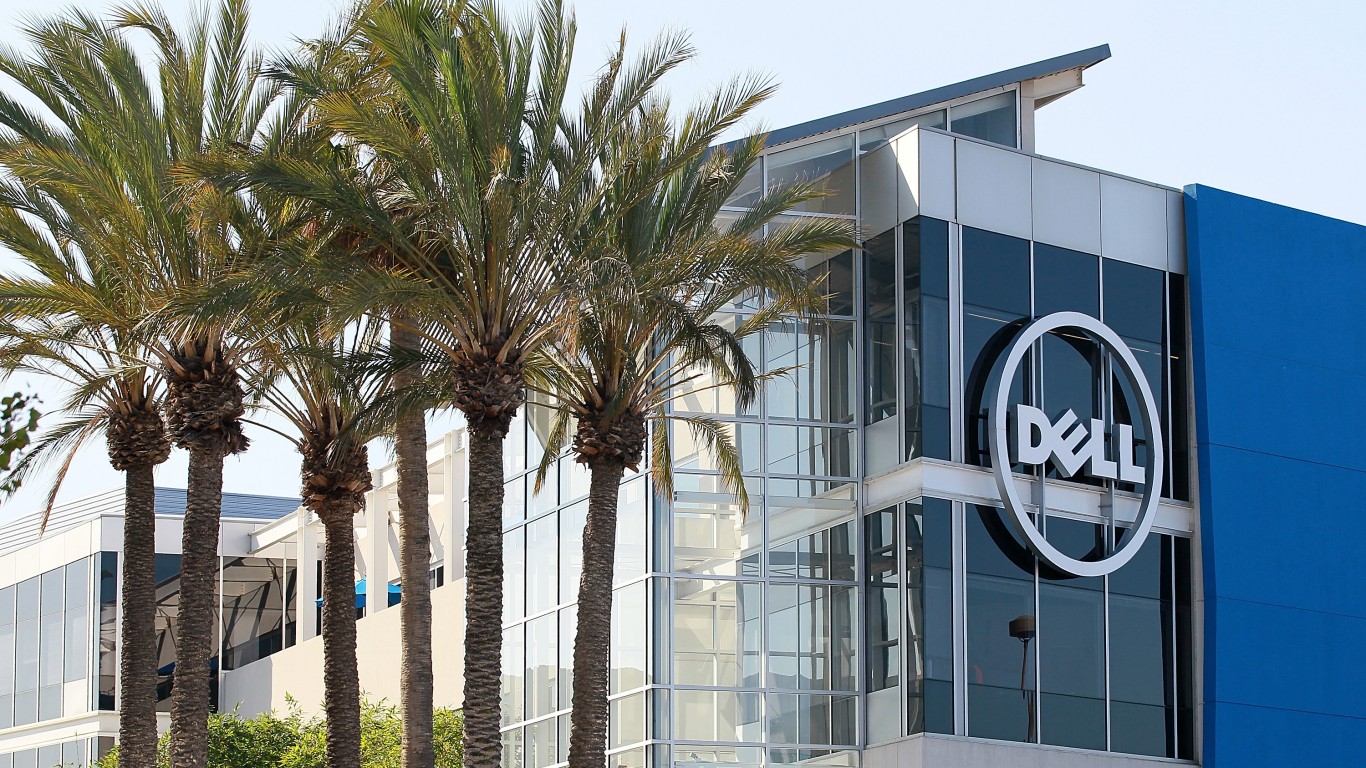
Justin Sullivan / Getty Images (Justin Sullivan / Getty Images)Quick Read -
DLLL plunged 16% as Dell fell 8%, and the 2x fund has lost 69% in a month despite Dell's 174% year-to-date gain.
Super Micro's DOJ smuggling probe and NVIDIA turmoil hit AI hardware, yet Super Micro slid only 2% while HPE dropped 4%.
Jeff Clarke says demand outstrips supply with a $95 billion AI backlog, but free cash flow sank 47% and chip shortages loom.
Building a portfolio and living off one are two completely different skills, and almost nobody teaches the second. This problem is what The Definitive Guide to Retirement Income helps, and it is free today. Read more here. (Sponsor)
Leveraged funds tied to AI hardware are taking the hardest hit as server stocks fall. The GraniteShares 2x Long DELL Daily ETF (NASDAQ:DLLL) recently traded at $11.40, down 16%. That fund aims to deliver twice the daily move of Dell Technologies (NYSE:DELL). It resets its leverage every day and can drift from that multiple over longer periods.
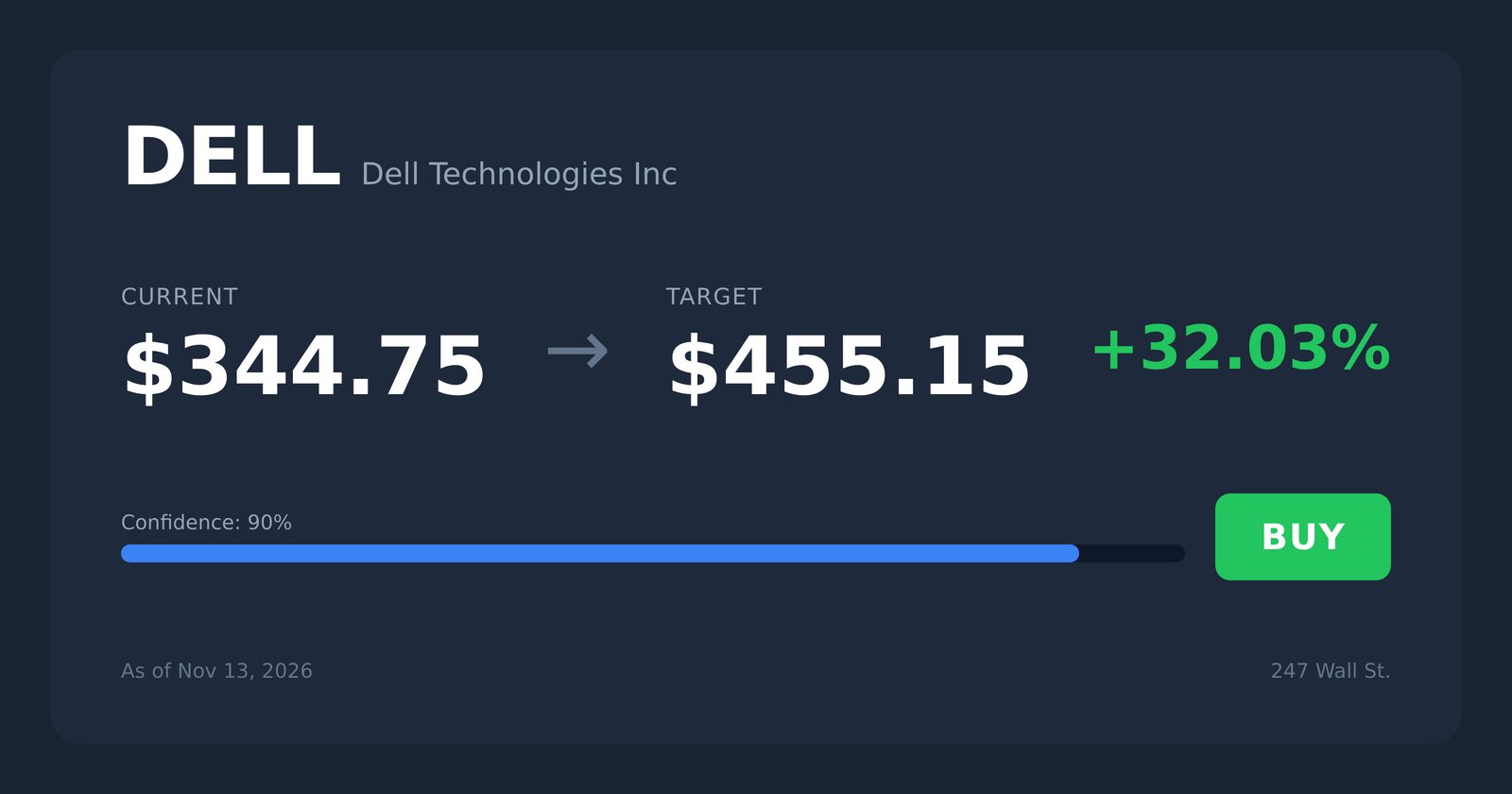
Dell stock is at $341.60, down 8%. Even after the drop, Dell is up 174% year to date (YTD), though it has fallen steeply over the past month. Swings in the GraniteShares fund have been violent, with a 69% decline over the past month.
DELL Price Target — 24/7 Wall St.AI Hardware Selloff Drags Dell Lower
Selling across AI hardware and chip names is pulling Dell lower, and the stock is moving with its sector. Technology stocks are fall as turmoil around NVIDIA (NASDAQ:NVDA) weighs on the AI trade. Bloomberg reported on November 12 that the Justice Department is examining smuggling allegations involving Super Micro Computer (NASDAQ:SMCI).
Now Available: The Definitive Guide to Retirement Income
Many successful investors eventually reach the same moment. The saving is done, the portfolio is built, and the question quietly changes from how much can I grow this to how much can I take out? Get that second question wrong and decades of good investing can come apart in a handful of years.
That is exactly what The Definitive Guide to Retirement Income helps answer. It covers what your retirement could actually cost, which income sources are worth using, and the withdrawal math that decides whether the money lasts. It is free today from Fisher Investments. Read More Here ›
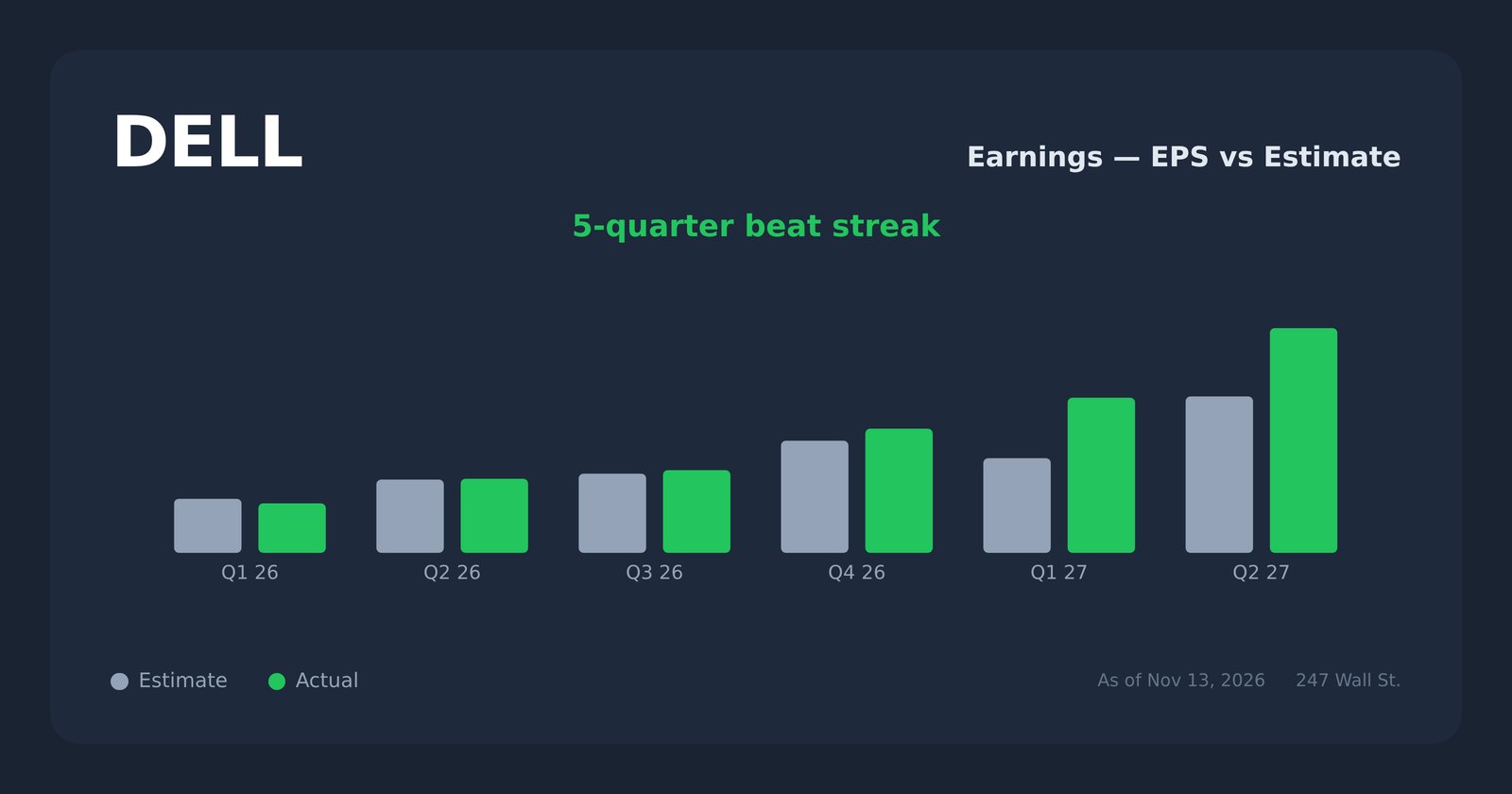
Heading into the selloff, Dell's fundamentals looked strong. On September 1, the company disclosed that its Q2 FY2027 revenue rose 57.8% year over year (YoY) to $46.97 billion. CEO Jeff Clarke said that in the AI server business, the company "booked a record $60.9 billion in orders, recognized a record $16.4 billion in revenue and exited the quarter with a record $95 billion backlog." The company also raised its full-year FY2027 revenue guidance to $192 billion.
DELL Earnings Explorer — 24/7 Wall St.What the Peer Group Says About Dell
Hewlett Packard Enterprise (NYSE:HPE) stock is at $47.93, down 4%. That's a smaller decline than Dell's for a company whose AI exposure runs mainly through enterprise servers and a networking business rebuilt around Juniper Networks. Both companies remain tied to the same AI infrastructure spending cycle, and their shares are moving in the same direction.
Advertisement
DELL Price Scenario — 24/7 Wall St.
Super Micro stock is at $26.54, down 2%. This cuts against the selloff's angle, since the company most directly tied to the Justice Department report is posting the smallest decline of the three stocks. Super Micro stock fell when the probe news surfaced on November 12.
How Dell's Business Model Differs From Its Rivals
Dell runs two engines: an Infrastructure Solutions Group selling AI-optimized servers, traditional servers, networking and storage, and a Client Solutions Group selling commercial and consumer PCs. That PC arm gives the company a source of diversification that pure AI server vendors lack. However, the mix shift toward AI servers has pressured Dell's margins, since those systems carry lower profits.
HPE is a pure enterprise infrastructure play with no consumer PC exposure. Networking carries more weight in its mix after the Juniper Networks acquisition, giving the company a growth driver distinct from Dell's server-heavy order book. Corporate data centers are HPE's core market, while Dell also sells AI systems to hyperscalers, enterprises and sovereign AI initiatives. The same expansion feeds a wider group of suppliers in power, cooling and networking, which we profiled in a free report on seven AI infrastructure names that aren't chipmakers.
Super Micro is the most concentrated of the three, built around its Data Center Building Block Solutions (DCBBS) and focused heavily on AI servers. Lower margins come with that focus, along with a governance concern from a board review of export-control transactions at Super Micro.
What Comes Next for Dell and Its Leveraged ETF
Dell now faces the question of whether AI server demand commentary stabilizes the group. On its September 1 earnings call, Dell management stated, "Demand outstrips supply. Demand was even greater than the results that we published there. We are supply constrained." The bulls point to that backlog of unmet demand, while the bears point to Dell's free cash flow, which fell 47.2% YoY to $986 million in Q2. Component shortages in memory and storage chips could also limit how fast Dell converts orders into revenue.
Leveraged single-stock funds reset daily, so in a choppy market their returns over weeks can differ sharply from twice the underlying stock's move. A steep daily drop in Dell is larger in the GraniteShares ETF by design. Costs add up too, as the fund carries a net expense ratio of 1.52%. Those amplified swings could persist until the AI hardware selloff ends.
Released: The Definitive Guide to Retirement Income
(Sponsor) Most people spend their entire working lives focusing on one thing: growing a pile of money. Then they retire and discover the skill they actually need is close to the opposite. Turning that pile into steady income, year after year, through good markets and bad, without ever running out.
It may be the least discussed and most consequential transition in personal finance, and plenty of otherwise careful investors walk into it with no real plan. That is exactly what The Definitive Guide to Retirement Income helps answer. It is a free guide from Fisher Investments covering what your retirement will really cost, where the cash flow should come from, and how much you can safely withdraw each year. Learn more here. Learn More Here ›
Contact editorial@247wallst.com for any questions or corrections.
Source: “AOL Money”
