


Fashion loves indigenous design. Here’s who never got paid.
Fashion loves indigenous design. Here’s who never got paid.

Sandra RoussySat, November 14, 2026 at 12:56 PM UTC
0
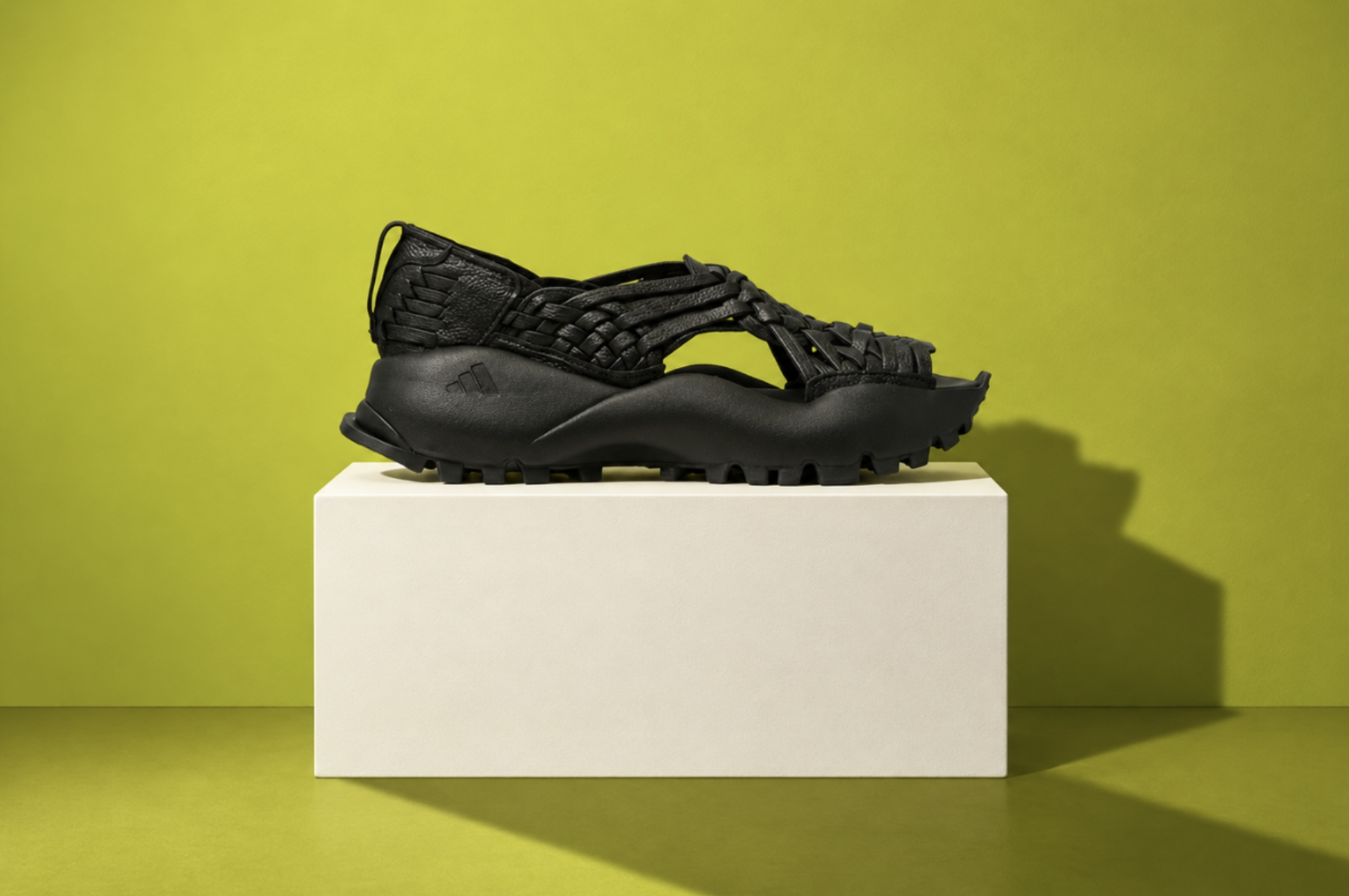
Adidas based a shoe on a Zapotec huarache, then said it was sorry. A former fast-fashion designer follows what happened next.
The line between inspiration and appropriation in fashion can be very fine. I saw how blurry that line could become during my more than 20 years as a fashion designer, including for fast-fashion retailers.
I still remember my first sample-shopping trip to New York City with a buyer. We spent two full days moving through stores in SoHo and along Fifth Avenue, buying pieces that caught our eye for their fabrics, prints, shapes, or details.
Back in the design room, we hung the samples on a rack and presented them to the vice president of design. Think Miranda Priestly from The Devil Wears Prada … except she was slightly less intimidating, but certainly not interested in having us second-guess her opinions. She pointed to a print, color, or detail she thought had potential, and I then took that direction to my team of graphic artists, who worked on prints for the collections I was designing.
At the time, it felt like a normal part of the job. Over the years, though, I saw how easily ideas and designs could move through the industry with little discussion of their origins.
I was never sent on sample-shopping trips to Mexico or other countries with strong Indigenous traditions. But what if one of the blouses I picked up on that New York trip came from a retailer that had already borrowed from an Indigenous design? By the time it landed on our store racks, would any of us have known where that print or embroidery we used for “inspiration” really came from?
By the time I left that industry, I seriously wondered where inspiration ended and copying began. That question becomes even more important when culturally significant designs are reproduced for profit without permission, credit, or compensation. At that point, inspiration can cross into appropriation, and even exploitation.
So when fashion borrows from Indigenous traditions, the question is: Who gets the credit, and who gets paid?
When Culture Becomes Commercial Fashion
Fashion has borrowed from traditional dress for generations, and Indigenous designs and textiles have repeatedly appeared on international runways and in fast-fashion stores.
Mexico has challenged fashion brands over the years. In 2015, Isabel Marant’s Étoile collection incorporated designs associated with the traditional blouse of Santa María Tlahuitoltepec. In 2020, Mexico again questioned Marant over Indigenous designs in her Fall/Winter 2020–21 collection. In 2019, Mexico’s Ministry of Culture questioned Carolina Herrera over Indigenous motifs used in her Resort 2020 collection.
These aren’t simply decorative patterns. A motif can identify a community, a tradition, and generations of shared knowledge. Removing it from that context can erase the people who created it.
Adidas Apologized. Then What?
One of the most recent cases involved Adidas and fashion designer Willy Chavarria. In early August 2025, they presented the “Oaxaca Slip-On,” inspired by the traditional huarache from the Zapotec community of Villa Hidalgo Yalálag in Oaxaca.
On August 7, 2025, Mexico’s National Institute of Indigenous Peoples (INPI) said the design had been used without the community’s authorization. Two weeks later, Adidas apologized publicly in Yalálag and promised continued dialogue. According to the Oaxacan government, rather than asking for money, community representatives proposed a cultural center, clinical laboratory, sports facility, scholarships, and water-treatment improvements, framing them as reparation rather than the sale of their culture.
What happened next is unclear. (Related: The Devil Wears Trendy Trash: The Dark Side of Ultra-Fast Fashion)
A year after Adidas’ apology, Yalálag still wasn’t informed about what it would receive. In August 2026, El Universal Oaxaca reported that the community didn’t know what stage the mediation had reached or what progress had been made toward reparations.
That uncertainty followed the mixed messages in 2025. In October, federal undersecretary for cultural development Marina Núñez Bespalova said a restitution contract involving community infrastructure was already in place. A month later, Yalálag officials, municipal president Eric Ignacio Fabián, and legal adviser Juan Maldonado Vargas told El Imparcial de Oaxaca that talks were still underway to define and sign a reparation agreement.
I contacted Maldonado Vargas and a Yalálag huarachero who attended the public apology, but they didn’t respond to my questions. Willy Chavarria’s media representatives also didn’t respond.
Adidas declined an interview, but sent me a written statement mentioning that it remained committed to “a respectful dialogue” with Yalálag and was working with local and state authorities. I asked whether Adidas had provided payment, licensing, revenue sharing, a funded community project, paid collaboration, or another concrete benefit. The company declined to answer.
As of publication, I found no public record of individual payment or compensation to the Yalálag community or artisans. It remains unclear what, if anything, has been delivered under the restitution agreement.
What happened to the Oaxaca Slip-On?
The shoe’s commercial status is also murky. On August 22, 2025, La Jornada reported that Adidas legal and compliance director Karen González said the Oaxaca Slip-On had not yet been commercialized. In October 2025, Núñez Bespalova said the shoe had been taken off the market and would never be sold in Mexico.
I found no public record confirming consumer sales.
Advertisement
What Does Respectful Collaboration Look Like?
Ehren Seeland, founder and creative director of Hecho, based in Oaxaca, has developed custom works with Mexican artisans for over a decade and also serves as an artisan liaison.
“I make a point of sharing the production information, as well as the artisan stories with the clients,” she said, both as a matter of respect and education. She said sharing those details helps clients feel more connected to the work and better appreciate the skill behind it, while helping support the traditions for future generations.
Seeland is also wary of the language brands use around artisan partnerships. “I read a lot about ‘empowering’ communities in brand marketing materials and it irks me,” she said. “Indigenous communities don’t need saving or sympathy; they need respect and understanding.”
Her question for fashion companies is clear: “Rather than simply taking traditional designs to use in the commercial market without cultural context, why not offer to collaborate with the community from where these pieces originate?”
Want more? Get PROVOKED’s free Thursday newsletter. Sign up at PROVOKEDMagazine.com.
How Mexico Is Protecting Cultural Heritage
In 2022, Mexico enacted the Federal Law for the Protection of the Cultural Heritage of Indigenous and Afro-Mexican Peoples and Communities, which recognizes collective rights over cultural heritage and sets rules for how that heritage may be used. It was amended in 2023 and again in 2025.
Carolina Aguilar, a research professor at the Autonomous University of the State of Hidalgo who specializes in human rights and Indigenous justice, said the law marked an important shift. “The principal achievement of the 2022 Federal Law … is that it recognizes traditional cultural expressions not simply as folkloric objects or elements of the public domain, but as expressions connected to the identity and autonomy of peoples and communities that hold collective rights over them.”
In practical terms, communities can decide whether and under what conditions elements of their cultural heritage may be used. Unauthorized use can lead to mediation, an administrative complaint, or legal action.
For fashion companies, that means a traditional design isn’t automatically free to reproduce simply because no individual designer can be named.
Aguilar said companies should conduct cultural due diligence before designing, producing, or marketing products and involve communities in decisions about how their heritage is presented, altered, and commercialized.
She doesn’t see the Adidas case as proof that the new law lacks effective tools, but rather as an example of relatively new legislation whose reach is still being defined through administrative and judicial processes.
Enjoyed this story? Read more from PROVOKED at provokedmagazine.com.
What Can the Apparel Industry—and Shoppers—Do Better?
For brands, the answer is simple. Identify the community that holds the cultural knowledge. Obtain consent. Collaborate rather than copy. Give credit. Pay fairly.
Shoppers shouldn’t be responsible for tracing every design back to its source, but we can pay attention. You may have a blouse in your closet right now with a pretty floral embroidery that you bought simply because you loved it. Most of us don’t stop to think where the motif came from and who created it first, especially when shopping in fast-fashion stores. You don’t need to become an expert in textile history, but a little curiosity can go a long way. When something looks culturally specific, it’s worth asking: Who made it? Where did the design come from? Were artisans involved?
Fashion has always been influenced by what came before and by cultures beyond its own borders. Cultural exchange isn’t the problem. The problem begins when one side gets the publicity and the profits while the people whose culture supplied the design become invisible.
Consent matters. Credit matters. And yes, payment matters too.
Related:
The Thrift Store Is My Midlife Rebellion
How Private Equity Killed the Feminist Department Store
Can You Buy Your Way Out of Climate Guilt?
Ask us! What questions do you have about content, strategy, pop culture, lifestyle, wellness, history or more? We may use your question in an upcoming article!
Ask us a question
Like MediaFeed’s content? Be sure to follow us.
This article originally appeared on PROVOKED and was syndicated by MediaFeed.co.
Source: “AOL Money”
