


Ford's Thriftpower Inline-Six Powered The Falcon, Mustang, And Bronco For 24 Years
Ford's Thriftpower Inline-Six Powered The Falcon, Mustang, And Bronco For 24 Years

Aakash BadreeSat, July 25, 2026 at 11:45 PM UTC
0
Llann Wé/Wikimedia Commons
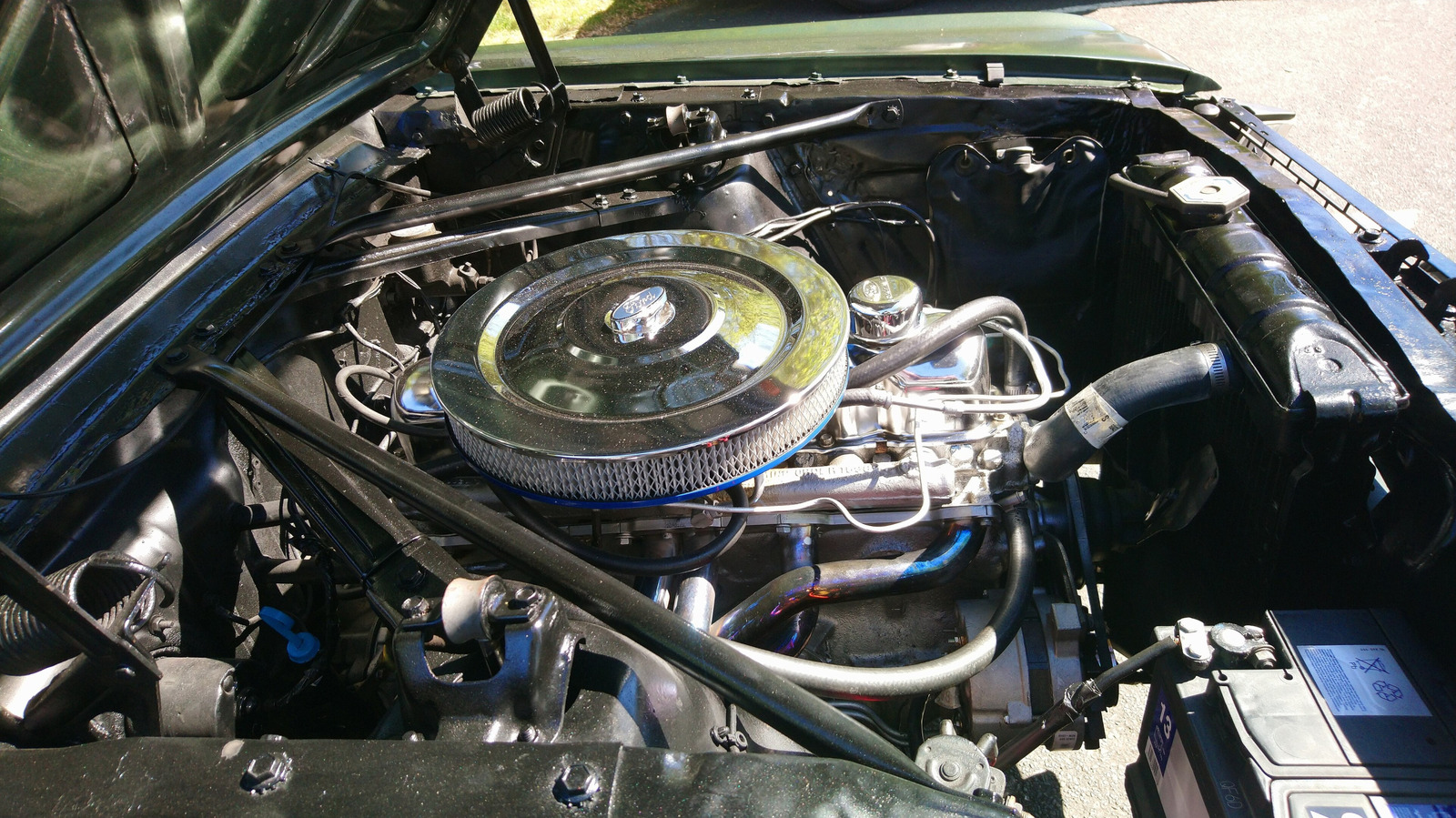
Long before Ford's wide range of turbocharged EcoBoost fours took over as the company's entry-level powertrain, the humble Ford Thriftpower inline-6 carried the workload for decades. First introduced in 1960 for the compact Falcon, the little cast-iron six grew and evolved through several displacements, eventually finding its way under the hoods of everything from the Mustang to the delightfully colorful original Maverick and a long list of Ford's bread-and-butter passenger cars until it finally bowed out in 1983. The 1983 Ford Fairmont and LTD, and Mercury's Zephyr and Marquis became the last cars to feature this legendary inline-6.
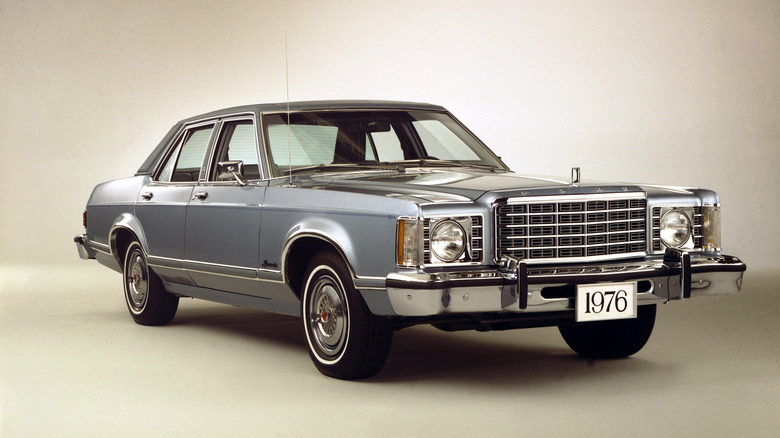
The family started small: The original Falcon engine displaced just 144 cubic inches, and by 1961, Ford had stroked it to 170 cubic inches in the Special Six variant that was optional for the Falcon and Comet. That 170 briefly became the standard inline-6 offered in the earliest Mustangs before Ford replaced it with a more thoroughly reworked 200-cubic-inch version in 1963. The 200 brought a redesigned bottom end with seven main bearings, a thicker block deck, and hydraulic lifters – improvements that made the engine noticeably smoother and quieter than its predecessor. That 200-cubic-inch Thriftpower inline-6 went on to power everything from Mercury Comets to Ford Fairmonts and the delusionally marketed Granada in the early '80s. Ford even brought it back for the Fox-body Mustang between 1979 and 1982 when a shortage of imported Cologne V6 engines from Germany left a gap in the lineup. However, it wasn't the final evolution of the Thriftpower inline-6.
Read more: 11 Huge Engines With Surprisingly Low Horsepower
How the Ford Thriftpower Inline-6 Evolved
Ford
In 1968, Ford stretched the six to 250 cubic inches, raising the block's deck height and lengthening the crank stroke to 3.91 inches. The larger displacement bumped output to roughly 155 horsepower and 240 pound-feet of torque – a meaningful step up from the 120-hp 200-ci version, which made the 250 an appealing option for buyers who preferred a smooth-running six instead of a heavier V8. Ford offered the 250 in the Mustang starting in 1969, and it became the standard engine for the 1971 through 1973 model years, when the larger and heavier pony car needed more of a nudge than the 200 could provide.
Advertisement
The inline-6's reach extended well past the Falcon and Mustang — early Broncos relied on the same 170-ci and 200-ci engines. Enthusiasts still regard Ford's inline-6 engines as remarkably durable, with plenty of examples racking up hundreds of thousands of miles on largely original internals. Performance builders have also since shown there's more to these engines than their humble reputation suggests.
The later seven-main-bearing 200-ci block is tougher and more durable than the earlier four-main-bearing casting, making it the more ideal build platform. Some enthusiasts have bolted on turbochargers and modern fuel injection to push output well beyond what these engines ever produced, entering the performance realm of the Ford Barra — their inline-6 cousins from down under. And while Ford moved on to more modern six-cylinder engines after that — such as the smelly V6 found in nearly every late '80s and '90s Taurus — the reliable Thriftpower inline-6 and its many variants set the benchmark for six-cylinder Ford passenger cars.
Want more like this? Join the Jalopnik newsletter to get the latest auto news sent straight to your inbox, and follow us or add us as a preferred search source on Google.
Read the original article on Jalopnik.
Source: “AOL Money”
