


From SpaceX's IPO to orbital data centers, execs say industry's future still in 'earliest innings'
From SpaceX's IPO to orbital data centers, execs say industry's future still in 'earliest innings'

Pras SubramanianSat, November 14, 2026 at 3:03 PM UTC
0
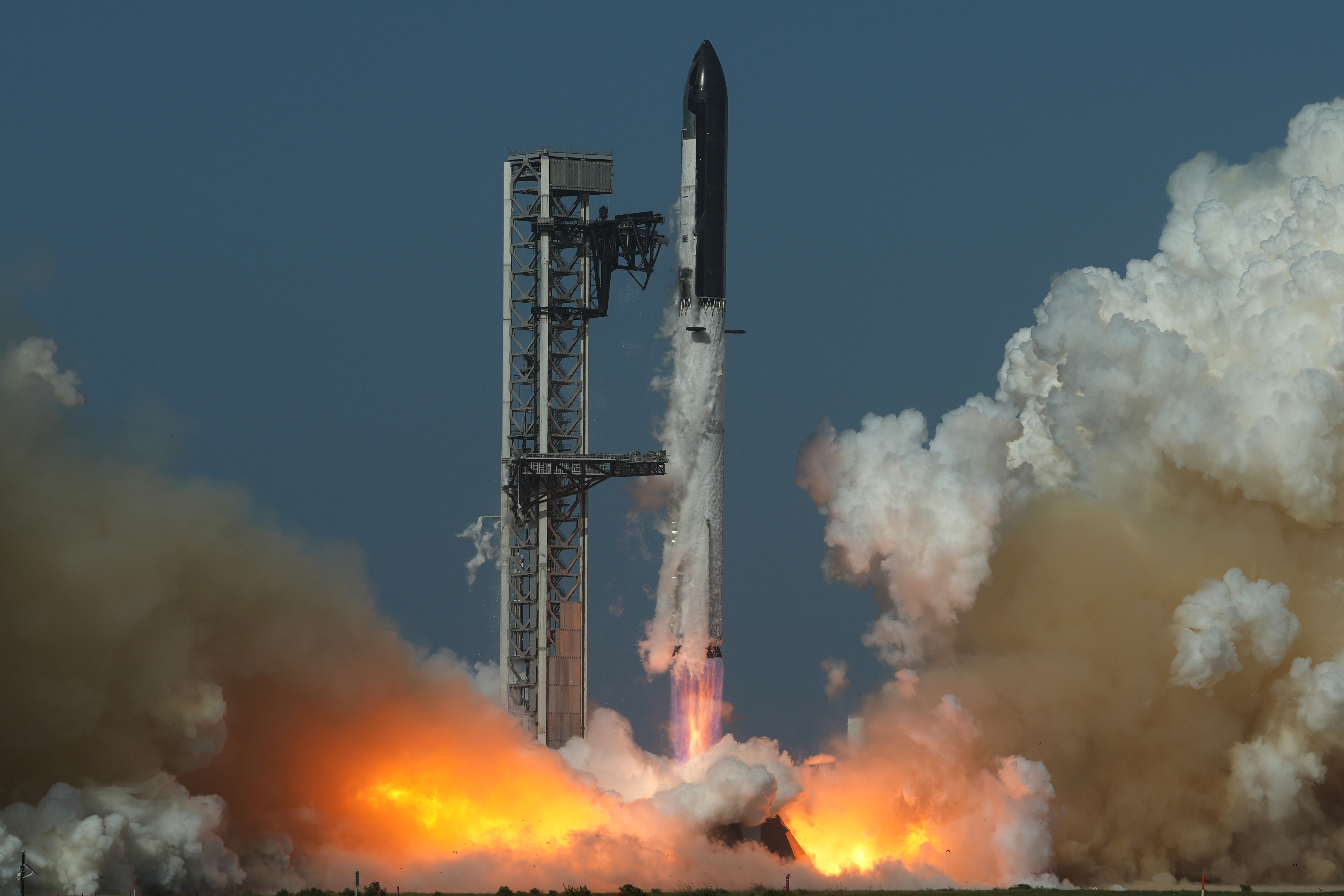
SpaceX's (SPCX) blockbuster IPO this year put the space economy squarely on Wall Street's radar. The bigger question for investors now is where the next leg of growth comes from.
That was the focus of "From Rockets to Revenue: Sizing Up the Space Economy," a panel at Yahoo Finance's Invest Conference earlier this week. Firefly Aerospace (FLY) CEO Jason Kim, Muon Space CEO Jonny Dyer, and Roundhill Investments ETF strategist Thomas DiFazio weighed in on launch economics, the next generation of satellites, defense, and data centers in orbit.
Here are my key takeaways.
The SpaceX IPO marked space going mainstream. "The thing I take away from it is that space is now mainstream," said Dyer, a former SpaceX employee. For 60 years, space was "the domain of only big governments and defense," he said. Now, technology and infrastructure on Earth and in space are converging, and "we're just in the earliest innings."
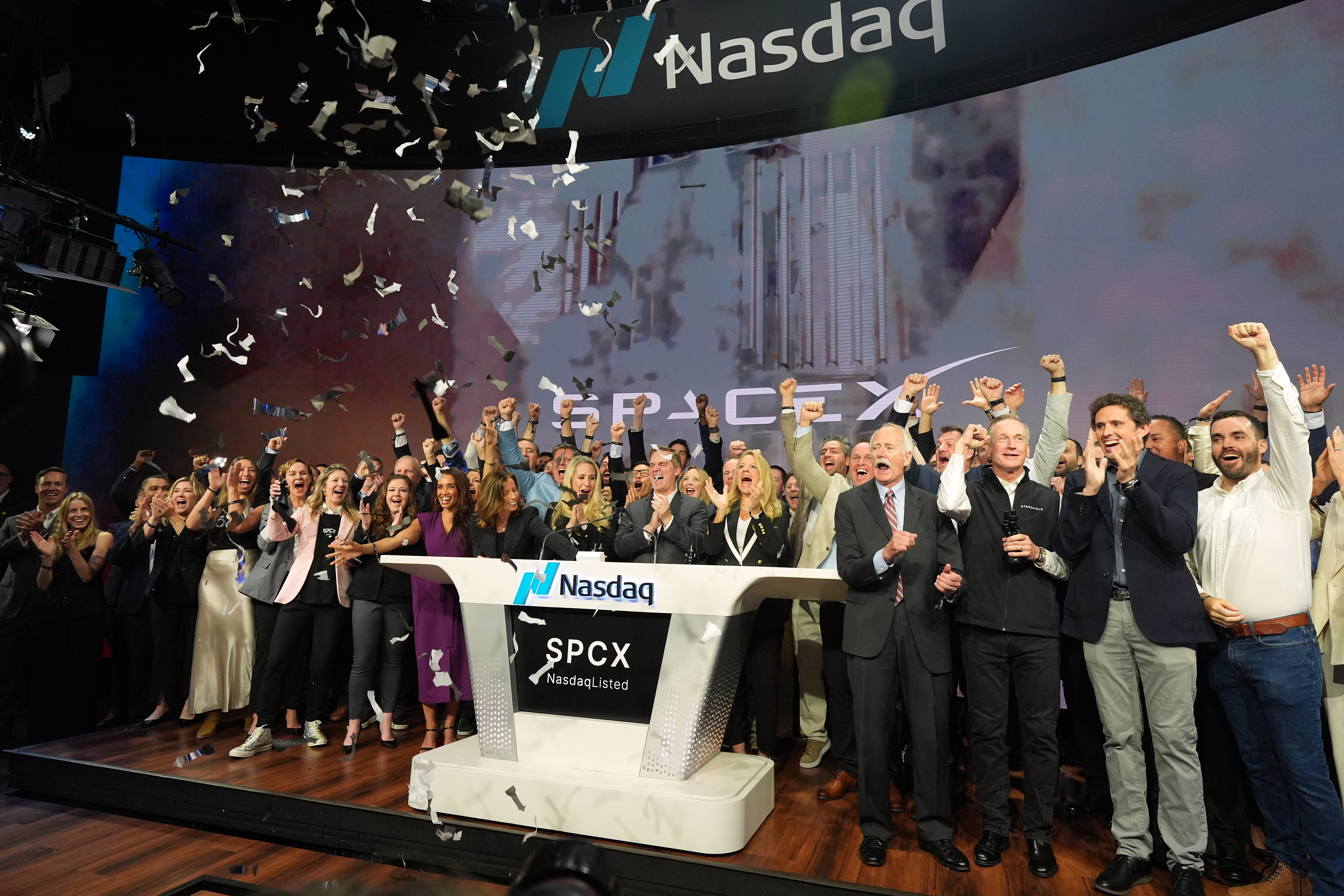
SpaceX employees celebrate during a bell ringing ceremony for the IPO of SpaceX at the Nasdaq MarketSite in New York, Friday, June 12, 2026, in New York. (AP Photo/Frank Franklin II)
DiFazio, whose firm runs the Roundhill Space & Technology ETF (MARS), called the offering's size and valuation "a really major endorsement" of the industry. He acknowledged the "emotional" fever pitch around the debut subsided as investors work out where the sector goes next.
The scale has changed dramatically. The late 1950s and early 1960s saw single-digit launches a year. Today there are hundreds, moving space "from what has been a government-led sector to what is now commercial-scale infrastructure," DiFazio said.
Launch demand still outstrips supply. DiFazio said launch providers are "not going anywhere," citing growing backlogs. Kim said customers are "just dying for more capacity."
Firefly is ramping up its small Alpha rocket, with six ship sets of Reaver engine chambers delivered in the fourth quarter alone. Flight 8 is preparing to launch, with flights 9 through 12 right behind it. Its medium-lift Eclipse rocket has logged more than 175 hot fires of its Miranda engine, totaling over 4,200 seconds.
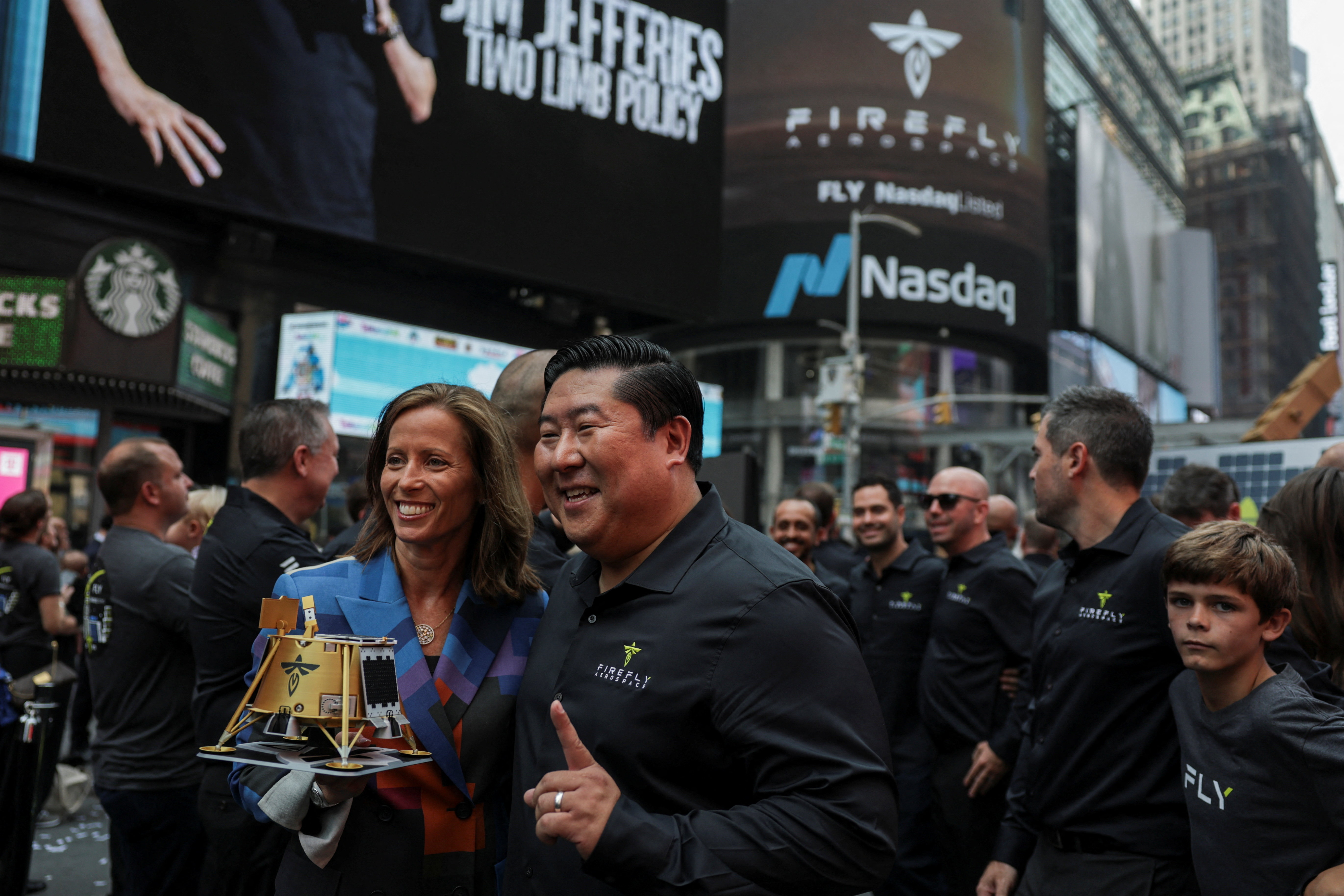
Firefly's CEO Jason Kim takes a photo with Adena Friedman, Chair and CEO of Nasdaq, during the company's IPO at the Nasdaq MarketSite in New York City, U.S., August 7, 2025. REUTERS/Jeenah Moon
Kim called Firefly's recent deal with AST SpaceMobile (ASTS) a "win-win." AST gets control of its launch schedule and economics by licensing Firefly's IP to build its own Miranda engines. Firefly gets a capital injection to accelerate Eclipse production. "The world needs Eclipse more than ever," Kim said.
Kim's broader pitch is to build a "railroad to the moon" with small- and medium-lift rockets, orbital transfer vehicles, and landers. Firefly won a $75 million JPL mission called Moonfall to carry drones to the moon, following its Blue Ghost lander's 14-day surface operation.
Since going public last year, "nothing's changed in terms of execution," Kim said, though the capital raised has sped up production and funded acquisitions.
Advertisement
Satellites are getting quicker and cheaper to deploy. Muon builds and operates constellations at "a speed and cost" that is "an order of magnitude less than has historically been possible," Dyer said. That includes FireSat, a wildfire-detection constellation that Muon began deploying this year with fire and public safety agencies worldwide.
Commercial customer Hubble Network is building a Bluetooth low-energy network in space, so "find my device" features can work anywhere on the planet.
Defense is a generational opportunity. With China "catching up very quickly," Dyer said the US needs to "reinvent a lot of the national security architecture" built in space over the past 60 years. That means swapping out "billion-dollar school buses," or gigantic satellites, for agile, software-defined, networked systems.
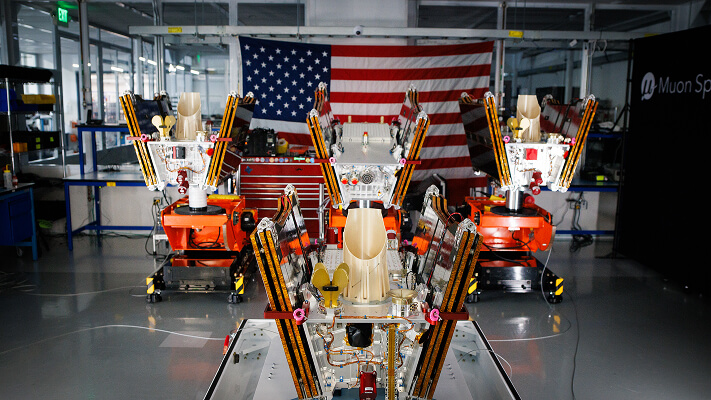
Satellites being built at Muon Space's facility
Dyer called it a "once-in-a-generation technology transition," with speed and in-space data processing as key advantages.
Data centers in space are already here, just not the kind Musk is pitching. Dyer said he's "a little less optimistic about the timeline" for moving gigawatt-scale AI training to orbit. But networking, storage, content delivery, and in-space processing are "getting deployed right now."
Kim said he's "bullish" on orbital compute, with Firefly focused on regional data centers. Last year, Firefly acquired SciTec, which builds data center software and frameworks for the US Space Force under the $800 million FORGE program.
Connectivity remains the consumer-facing growth story. DiFazio said it's "underappreciated" how much space technology is woven into everyday life.
He pointed to Starlink on flights as something that "changes the game," along with iPhones that can connect to a satellite to "fire off a text message" when there's no cell signal. That business is "only getting more and more intertwined in our lives," DiFazio said, and it grows "with every new launch that has a payload that expands the constellations to serve us as consumers."
Dyer noted that consumers already rely on early versions of this, from the GPS on their phones to Starlink.
DiFazio also flagged the removal of space debris as an emerging market. A Japan-based company in his fund is contracted by governments to remove defunct or malfunctioning equipment, as low- and high-Earth orbits get "a little bit more crowded."
Pras Subramanian is the lead mobility reporter for Yahoo Finance. You can follow him on X and on Instagram.
Source: “AOL Money”
