


Healey wargaming tax on AI
Healey wargaming tax on AI

Harry BrennanSat, November 14, 2026 at 3:00 PM UTC
0
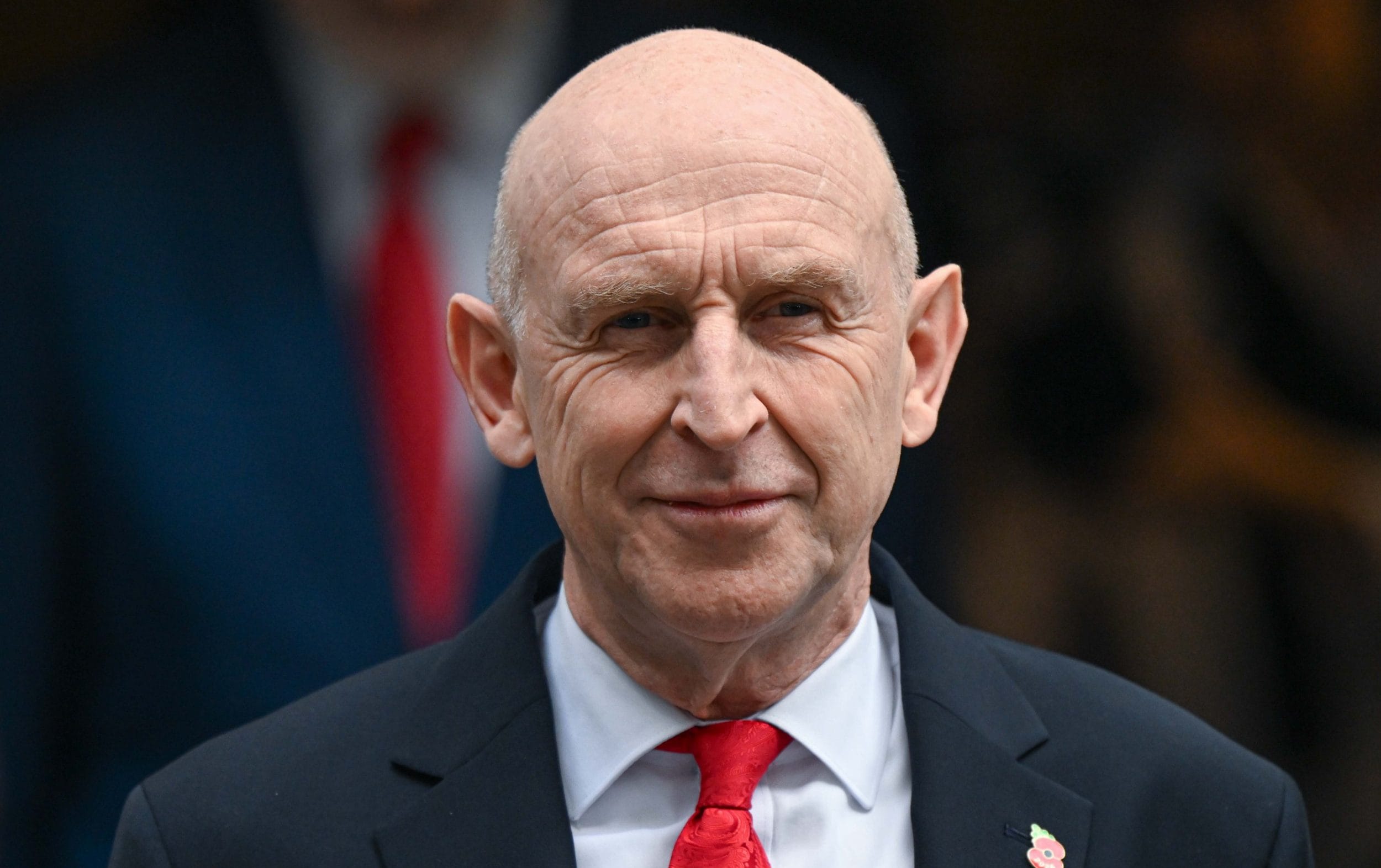
John Healey, the Chancellor, faces a significant hit to income tax receipts if AI caused mass job losses - Anadolu
The Treasury is wargaming the introduction of an AI tax in the event of widespread job losses, The Telegraph understands.
Civil servants have been tasked with analysing a range of economic consequences that could stem from the rise of the technology, including labour market disruption and a subsequent drop in tax receipts.
No 11 and the Department for Science, Innovation and Technology are working with academics and experts under a new AI Economics Institute, set up in June by Rachel Reeves, the former chancellor, to understand the opportunities, risks and “inform government policy”.
The institute has been tasked with assessing whether new taxes will be needed to cover the loss of income tax and National Insurance revenue in the event of widespread job losses, according to a source familiar with its work.
The team will look at whether the impact is great enough to necessitate a shift from taxing labour to increasing levies on capital, such as by targeting companies that are likely to be the main beneficiaries of an AI productivity boost.
Options already discussed in academic and economic circles include: a tax on owning or operating AI; an AI “robot services tax”; a global tax on excess profits; and higher rates on capital gains and corporation taxes.
‘Level the playing field’
John Healey, the Chancellor, is under pressure from unions to act, while Rishi Sunak, the former prime minister, has also called for the Government to “rebalance the tax system” in the face of automation.
The scenario planning is still in the early stages. The institute is not responsible for drafting tax policy and any policy decisions are understood to be some way off.
Officials are understood to be cautious about the need to balance preparing for the economic downsides of AI, while benefiting from the tech boom and retaining science talent in the UK.
A source told The Telegraph: “With something like corporation tax, for example, you have to be very careful about making yourself a less beneficial place to be and to have talent.
“We have been good at pulling more people in and strengthening our global position in the AI sector.
“You don’t tax something like this when it is growing, but as it matures you will see more clearly where you can raise tax in a reasonable way to level the playing field between automation and labour.”
One of the most difficult questions is how tax authorities around the world will be able to target companies profiting from AI in foreign jurisdictions, particularly the US. Officials have raised the idea of some form of international collaboration, similar to countries agreeing a global minimum corporate tax rate.
Advertisement
It is likely to be part of discussions between finance ministers at the upcoming G20 summit in Manchester at the end of the month.
Treasury staff will also be keeping an eye on discussions at a scenario planning meeting of the private sector and government officials from different countries hosted by the International Monetary Fund (IMF) in Washington DC in January.
The IMF has warned that AI could result in “broad job losses” and the “erosion of the labour tax base”. It has cautioned against “blunt robot taxes” on AI technology itself, but has advised that governments shift “taxation from labour to capital” and to economic rents.
In Britain, the Office for Budget Responsibility (OBR) has warned that AI could “significantly affect” gross domestic product (GDP) growth and income tax revenues, but that outcomes at this stage are “extremely uncertain”.
In July, the OBR published a report saying that in a pessimistic scenario, AI uptake risked “a significant reduction in jobs in the economy and/or large changes in relative wage bargaining power away from workers to employers”, with taxes from wages as a share of GDP halving over the coming decades.
Insiders believe we have around five years to prepare, after which the extent to which AI either boosts the productivity of existing jobs or makes roles redundant will become clearer and any policy can be deployed.
Unions are pressuring Labour to act sooner in an effort to disincentivise companies from sacking staff.
A coalition of labour organisations, including major unions such as GMB, are backing a new campaign called The New Contract.
It is calling for workers to be given “a fair share of the gains” of AI returns, which would involve equal tax treatment of capital and labour, a tax on excess profits derived from the technology and a tax on the services provided by AI robots.
Mr Sunak – who consults for AI giant Anthropic, which is behind the chatbot Claude – said in March that tax reform was “perhaps the most significant change” Britain needed to make in the face of AI.
Writing in The Times, Mr Sunak said: “Given the existential risk to the social contract posed by an AI-induced spike in structural unemployment, the Government should be looking to rebalance the tax system: reducing, and ideally eventually removing, taxes on employment and raising that revenue elsewhere.”
The former prime minister championed the idea of a global minimum corporation tax during his time in government. He also advises Microsoft, which runs AI chatbot Copilot.
The Treasury was approached for comment.
Source: “AOL Money”
