


The U.S. Just Ran Its Biggest October Deficit Ever: $404 Billion
The U.S. Just Ran Its Biggest October Deficit Ever: $404 Billion

Omor Ibne EhsanFri, November 13, 2026 at 3:03 PM UTC
0
24/7 Wall St. (24/7 Wall St.)Quick Read -
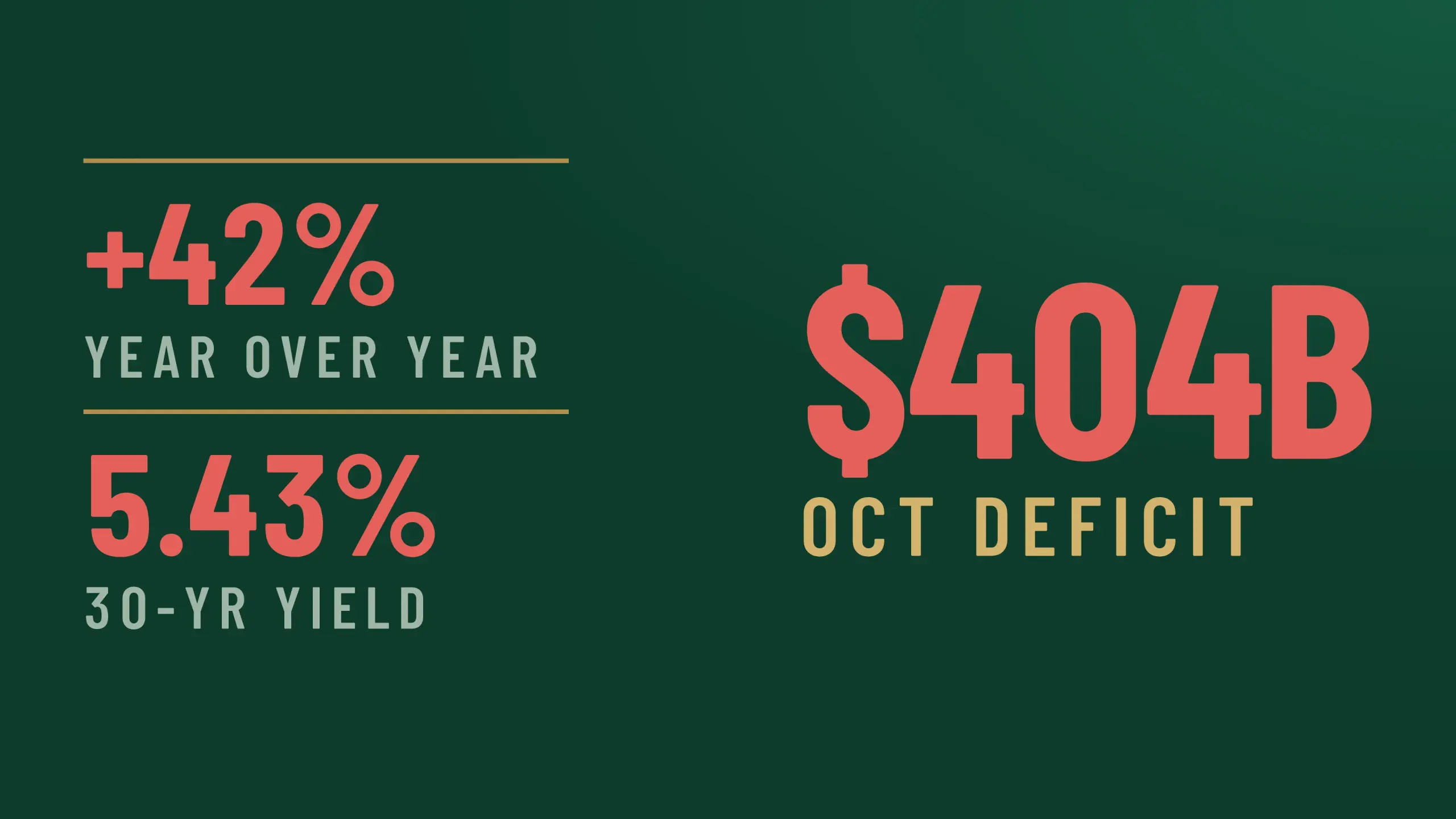
TLT fell 1.48% as the 30-year yield hit 5.43%, with selling that began before the record October deficit report.
Even adjusted for calendar shifts, the deficit jumped 49% as record October outlays outran revenue, and tariff receipts fell 39%.
SGOV offers a lower-risk alternative, since 52-week Treasury bills pay 4.52% with very little rate risk.
Building a portfolio and living off one are two completely different skills, and almost nobody teaches the second. This problem is what The Definitive Guide to Retirement Income helps, and it is free today. Read more here. (Sponsor)
In October 2026, the first month of fiscal 2027, the federal government spent $773 billion and collected $368.94 billion. The Monthly Treasury Statement released November 12, 2026, put the gap at $404.06 billion. That is the largest October deficit on record, up $120 billion, or 42%, from $284.33 billion a year earlier.
The prior October high was $284.07 billion in 2020. The Congressional Budget Office had estimated $409 billion, so the figure was in line with estimates.
Long-dated Treasuries still went down during the session. The iShares 20+ Year Treasury Bond ETF (NASDAQ:TLT) closed at $79.72, down 1.48%, as the 30-year yield reached 5.43%. Selling started before the 2 p.m. release, so the deficit added to existing pressure and helped explain why selling has continued.
Calendar Shifts Inflate the Record, but the Gap Still Widened
Payments normally due November 1 moved into October in both years because the date fell on a weekend. Adjusted for those shifts, the deficit would have been $285 billion, which falls short of a record but still marks a $94 billion, or 49%, jump.
That adjusted number matters more because it shows spending outpacing revenue. Outlays rose $84 billion, or 12%, a record for any October.
Part of the receipts drop is a one-off. Individual non-withheld tax receipts fell $29 billion, or 36%, to $51 billion, because delayed deadlines for Californians hit by the early-2025 wildfires had inflated the year-earlier month.
Now Available: The Definitive Guide to Retirement Income
Many successful investors eventually reach the same moment. The saving is done, the portfolio is built, and the question quietly changes from how much can I grow this to how much can I take out? Get that second question wrong and decades of good investing can come apart in a handful of years.
That is exactly what The Definitive Guide to Retirement Income helps answer. It covers what your retirement could actually cost, which income sources are worth using, and the withdrawal math that decides whether the money lasts. It is free today from Fisher Investments. Read More Here ›
Tariff Revenue Is Fading as an Offset
Customs duties were $19.22 billion, down 39% from $31.35 billion in October 2025, when tariff revenue topped out. Treasury gave no reason beyond that high base.
Advertisement
National defense outlays rose to $128.88 billion from $99.94 billion, although part of that was a trust fund payment delayed by last year's shutdown. Agriculture Department spending climbed $14 billion, or 80%, on farm relief.
Interest costs are now feeding bond supply. Net interest was $103.08 billion, up from $90.87 billion, and gross interest on the debt reached $115 billion, up 11%. Higher yields raise that bill, and a bigger bill means more bond sales that can push long yields higher.
Fiscal 2026 ended with a $1.99 trillion deficit, equal to 6.2% of GDP, against the Treasury Secretary's 3% goal.
Why TLT Takes the Hit First
TLT holds Treasuries maturing in 20 years or more, so it has high duration, meaning its price moves sharply when long yields change. The fund is down 4.94% year to date and 35.1% over five years.
Monthly payments help, with a trailing 12-month total of $3.909433 per share, but they have not kept up with those price losses.
The bull case rests on a simple idea: locking in a 5.43% long yield pays well if the economy slows and rates fall.
The deficit trend points the other way, though, and it likely keeps pressure on TLT for income investors. Even the calendar-adjusted gap grew 49%, and nothing in this report shows spending slowing.
Treasury bills offer a different trade-off, with the 52-week bill paying 4.52% and very little rate risk. The iShares 0-3 Month Treasury Bond ETF (NYSEARCA:SGOV) is an easy way to hold them.
The Fed's December 8-9 meeting will be the real test. If the 30-year yield falls back below its November 10 level of 5.35% by then, this bearish view is wrong.
Released: The Definitive Guide to Retirement Income
(Sponsor) Most people spend their entire working lives focusing on one thing: growing a pile of money. Then they retire and discover the skill they actually need is close to the opposite. Turning that pile into steady income, year after year, through good markets and bad, without ever running out.
It may be the least discussed and most consequential transition in personal finance, and plenty of otherwise careful investors walk into it with no real plan. That is exactly what The Definitive Guide to Retirement Income helps answer. It is a free guide from Fisher Investments covering what your retirement will really cost, where the cash flow should come from, and how much you can safely withdraw each year. Learn more here. Learn More Here ›
Contact editorial@247wallst.com for any questions or corrections.
Source: “AOL Money”
